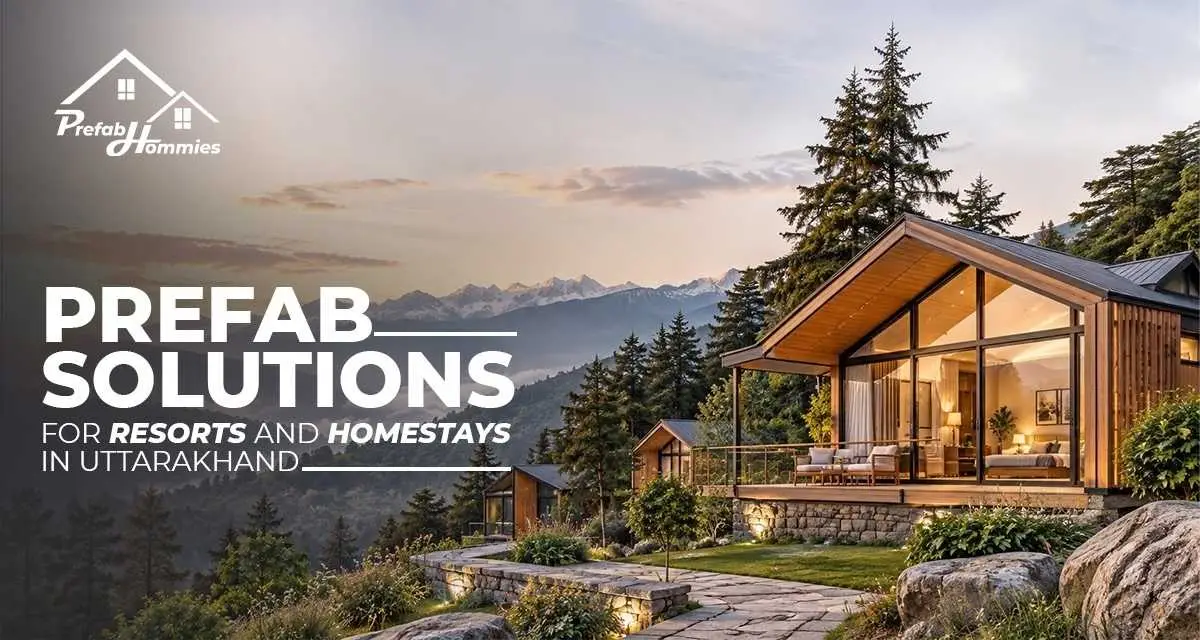
For the tourism industry in Uttarakhand, aesthetics are the crux of its economy, and aesthetics is exactly what makes building structures difficult. It is the steep topography, clearances in the forest, rains in monsoon, and the short window period between October and March which makes conventional brick and mortar structures challenging. For the resort developer in Mukteshwar or for the homestay in Kanatal, starting work in April means there would still be work going on the laying of the foundation when it starts to snow, which is why many developers are increasingly turning to prefab resorts in Uttarakhand as the best option.
When it comes to prefabrication, all of the above becomes immaterial: prefab structures are assembled off-site and transported as modules which can be put together in a few weeks’ time, rather than months or seasons
Building traditional RCC structures on a hillside requires massive excavation and heavy, expensive retaining walls. On the other hand, prefabricated systems typically rely on lightweight steel or timber frames anchored to screw piles or isolated footings. This means minimal cutting into the natural slope, less soil disturbance, and a significantly lower risk of landslide-triggered damage.
A prefab cabin can even be lifted and repositioned if soil erosion threatens the site over time—an option no masonry structure could ever offer. Plus, because these lighter structures place a much smaller load on the ground, navigating the local project approval process becomes a whole lot easier in most hill districts.
The economics of a hill resort are highly seasonal in nature. High season occupancy is concentrated during summer vacations and the Char Dham pilgrimage season. Every month of delayed handover is one month of missed revenue at full rate.
A prefabricated homestay unit is delivered from booking to occupation in 4 to 8 weeks, meaning that a property ordered in February will start earning in April. In case of a gradual expansion of capacity, for instance, two cottages this year and three next year, prefabricated cottages ensure this without another round of heavy construction work.
The comfort of the guests at the hills depends entirely on one factor, which is whether the building is warm. Prefab panels of insulation with cores made of PUF, EPS, or rock wool have consistent U-values that the stone and mortar walls cannot maintain easily.
Double-glazed windows and a wood or pellet stove will ensure that the prefab cabin is warm enough to survive the cold nights of Nainital using far less fuel than conventional buildings. The insulation principle applies equally well to the warmer season in Doon Valley.
Old concerns about prefabs revolved around their resemblance to having simply dumped a cargo box on top of a hill. Fortunately for us all, such stereotyping has been thoroughly debunked. Contemporary prefab structures incorporate pitched roofs, timber panelling, enormous glass gables and cantilevered decks in an easy, luxurious manner.
You can even use local stone and slate for the facade or roofing to blend into the scenery and meet strict local building codes. The result is a stunning, high-end property that photographs beautifully for your online booking listings, despite being built entirely from factory-controlled, precision components.
Hill sites do not have dependable town water or sewage facilities. Prefabricated structures can be integrated much easier into rainwater harvesting, dual-flush toilets, and packaged biogas digester or STP systems based on the number of rooms.
Solar power with battery backup is more readily installed on a light roof than a heavy one. In remote homestay locations where there is no possibility of dependable grid power, this feature often makes all the difference to the viability of the project.
Prefabricated construction is not necessarily cheaper per square foot than conventional construction. Its key advantages often lie in reduced on-site labour, potentially lower foundation costs, shorter construction timelines, and improved cost predictability. Anyone looking at offers should remember that they must be fully aware of what is being offered: foundations and piles, delivery of the panels to the hillside location, erection of the panels by crane or by hand, wiring, piping, insulation, and finishes.
These hidden discrepancies are what make prefabricated budgets fail. Another parameter is the site accessibility – if the road cannot be navigated by a 20-foot trailer, everything changes.
Uttarakhand’s hill districts operate under strict development authority rules, and plots adjacent to protected forests carry severe zoning restrictions. While the lightweight nature of a prefab structure generally makes it much easier to comply with these regulations, it does not remove the need for proper land-use clearances, an official NOC from the concerned development authority, and strict adherence to local setback distance rules.
Prefab construction has become a common practice in Uttarakhand, not an innovation, as it becomes the only solution for the conditions created by the land, climate, and seasonality, which regular construction practices do not resolve in a cost-effective way. When developers and homestay providers have a need to work fast, construct lightweight structures, and keep their guests warm on the ridge, the choice becomes obvious.
When choosing a company that offers such services, Prefab Hommies undoubtedly remains the right choice. Prefab Hommies is deeply involved in custom-made prefab cottage construction, offering unique infrastructure for both interiors and exteriors—such as durable tin shed roof structures, high-insulation UPVC windows and doors, professional waterproofing, and premium PVC fabrication in Dehradun.
It becomes clear that the construction of the structure, its protection against weather conditions, and its interior become the responsibility. Those who are interested in developing modern prefab resorts in Uttarakhand or constructing cozy prefab homestays in Uttarakhand will enjoy a highly cost-effective, timely, and completely hassle-free building experience.