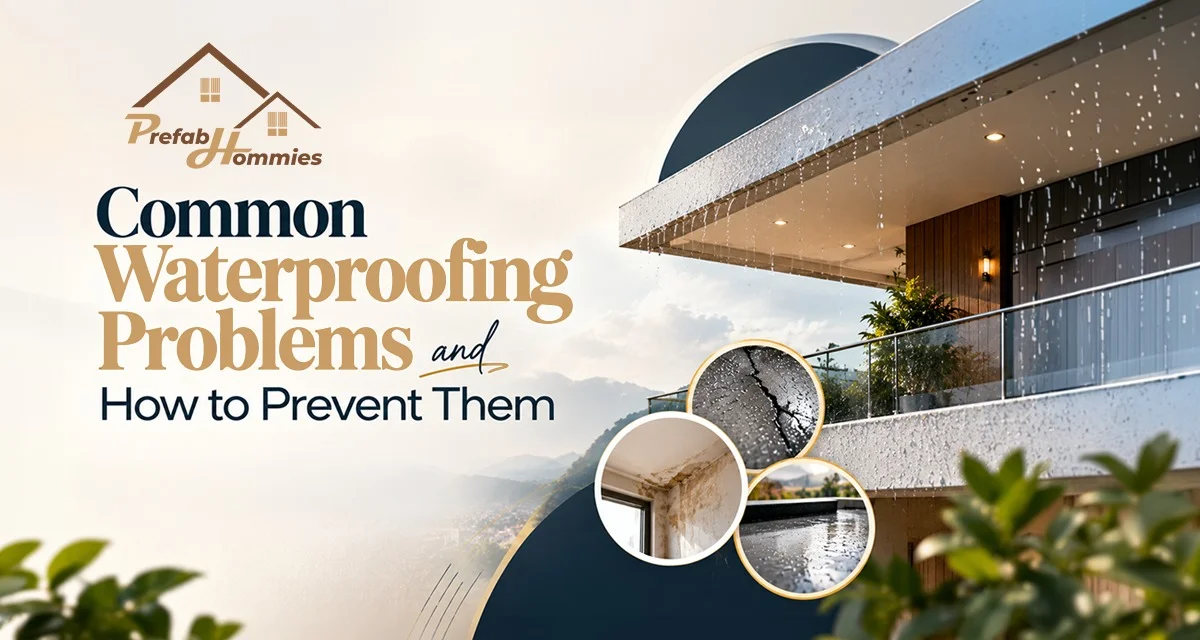
Water is one of the main silent enemies of any building. It starts creeping in gradually, spreading silently. By the time you realize that there are water patches, peeling paint, or even the development of mold, it’s too late. It doesn’t matter whether you have a private residence, office, cottage, or even commercial structure; waterproofing is not a choice but a structural requirement.
It is very important to understand the common waterproofing problems so that you can protect your property from expensive maintenance and health problems associated with it. We will discuss these in detail in this article.
Hairline cracks in the concrete, external plaster, or joints can be the beginning of big leakage problems in buildings. They occur because of the settlement of the structure, because of the thermal effects of changing weather conditions, or poor quality of the construction material used in the construction process. The rainwater gets inside and begins to weaken the structure from within.
A flat roof, terrace, or tin shed will quickly become full of rainwater if it is not kept in shape. If the roof is completely flat or covered with mud and debris, rainwater will stay on it for days and gradually eat through the concrete and the interior iron bars.
How to Avoid It: Make sure that your roof has a proper slope that will facilitate the easy passage of rainwater into the outlets. Do not let dirt or other materials obstruct the drainage pathways. Damage to your roof can be avoided by using a suitable waterproofing compound such as APP or liquid polymer.
Water is used constantly in a bathroom and kitchen. Therefore, these areas are perfect for hidden leaks. They often start with loose joints on the plumbing pipes, pinholes in the pipes that can’t be seen, cracked grout on tiles, and a complete absence of a waterproof membrane beneath the floor tiles. The water that is leaking gradually works its way through the surrounding floors and walls, which causes paint to peel and develops a mildew smell.
How to Prevent It: The best prevention for this would be to make all these moist areas waterproof as you tile by using sunken slab waterproofing and grout with epoxy between the tiles. Also, you should be routinely assessing your plumbing once per year and regrouting all the gaps.
Clear whitish powdery marks, cracks in the paint, and dark patches of mold formation are clear signs of too much moisture being stored in your walls. Besides ruining the look of the interior of your home, these deposits can also cause your home to smell stale and cause you allergies and breathing issues.
How to prevent: Don’t just brush off and repaint the damp wall without handling the cause. Find out the source of the water leak and fix it. Place anti-efflorescence primer on the impacted wall surface, then add weatherproof paint and damp-proof filler on the exterior.
Several buildings are victims of poorly executed waterproofing due to the use of cheap materials, unskilled workers, or lack of surface preparation. The chemical coatings fail after one season, joints develop, and the problem of seepage becomes much worse than before.
How to Avoid: Use a complete system-based approach of surface preparation, priming, sealing of cracks, application of coating, and protection of the material, rather than just application of a layer of chemicals. Also, use branded waterproofing materials and employ skilled workers to conduct a water ponding test.
Waterproofing is not only about fixing water leaks but also about the durability of your property, its good condition, and increased value in the future. In case of roof leaks, wall cracks, bathroom leakage, or even the growth of mold, the preventative steps will protect you from any future structural damage.
It goes without saying that the first thing that will occur to your mind would be Prefab Hommies, which is the right choice to pick. Being known for high-quality, durable, and eco-friendly prefabricated structures, the brand understands how tough modern-day construction can be, especially with regard to moisture-proofing and leakage problems. You do not have to make extra efforts; just get in touch with Prefab Hommies to get the best waterproofing services in Dehradun.